Mixed media (acrylic, ink acrylic, and graphite) on canvas.
Dimensions: 59’ x 49” inches
The Falling Angel is a work that explores the suspended instant between collapse and transformation. The figure of the angel is not presented as an idealized or divine being, but as a vulnerable presence caught in a moment of internal fracture, where the spiritual and the human collide.
At the core of the piece is the idea of imbalance—not as an endpoint, but as a passage. The fall becomes a metaphor for transition, where descent is charged with emotional and symbolic weight. Rather than depicting destruction, the work focuses on the tension of becoming: the precise instant in which identity starts to dissolve but has not yet reformed.
The surface language of the piece—its lines, textures, and layered marks—acts as a record of inner states: memory, conflict, and emotional residue. Through a figurative surrealist approach, the body of the angel becomes a site where fragility and resistance coexist, revealing the complexity of human experience beneath spiritual imagery.
Ultimately, The Falling Angel invites the viewer to inhabit that uncertain space where something has already begun to fall apart, yet still carries the possibility of transformation, clarity, or rebirth.
Mixed media (acrylic, ink acrylic, and graphite) on canvas.
Dimensions: 59’ x 49” inches
The Falling Angel is a work that explores the suspended instant between collapse and transformation. The figure of the angel is not presented as an idealized or divine being, but as a vulnerable presence caught in a moment of internal fracture, where the spiritual and the human collide.
At the core of the piece is the idea of imbalance—not as an endpoint, but as a passage. The fall becomes a metaphor for transition, where descent is charged with emotional and symbolic weight. Rather than depicting destruction, the work focuses on the tension of becoming: the precise instant in which identity starts to dissolve but has not yet reformed.
The surface language of the piece—its lines, textures, and layered marks—acts as a record of inner states: memory, conflict, and emotional residue. Through a figurative surrealist approach, the body of the angel becomes a site where fragility and resistance coexist, revealing the complexity of human experience beneath spiritual imagery.
Ultimately, The Falling Angel invites the viewer to inhabit that uncertain space where something has already begun to fall apart, yet still carries the possibility of transformation, clarity, or rebirth.
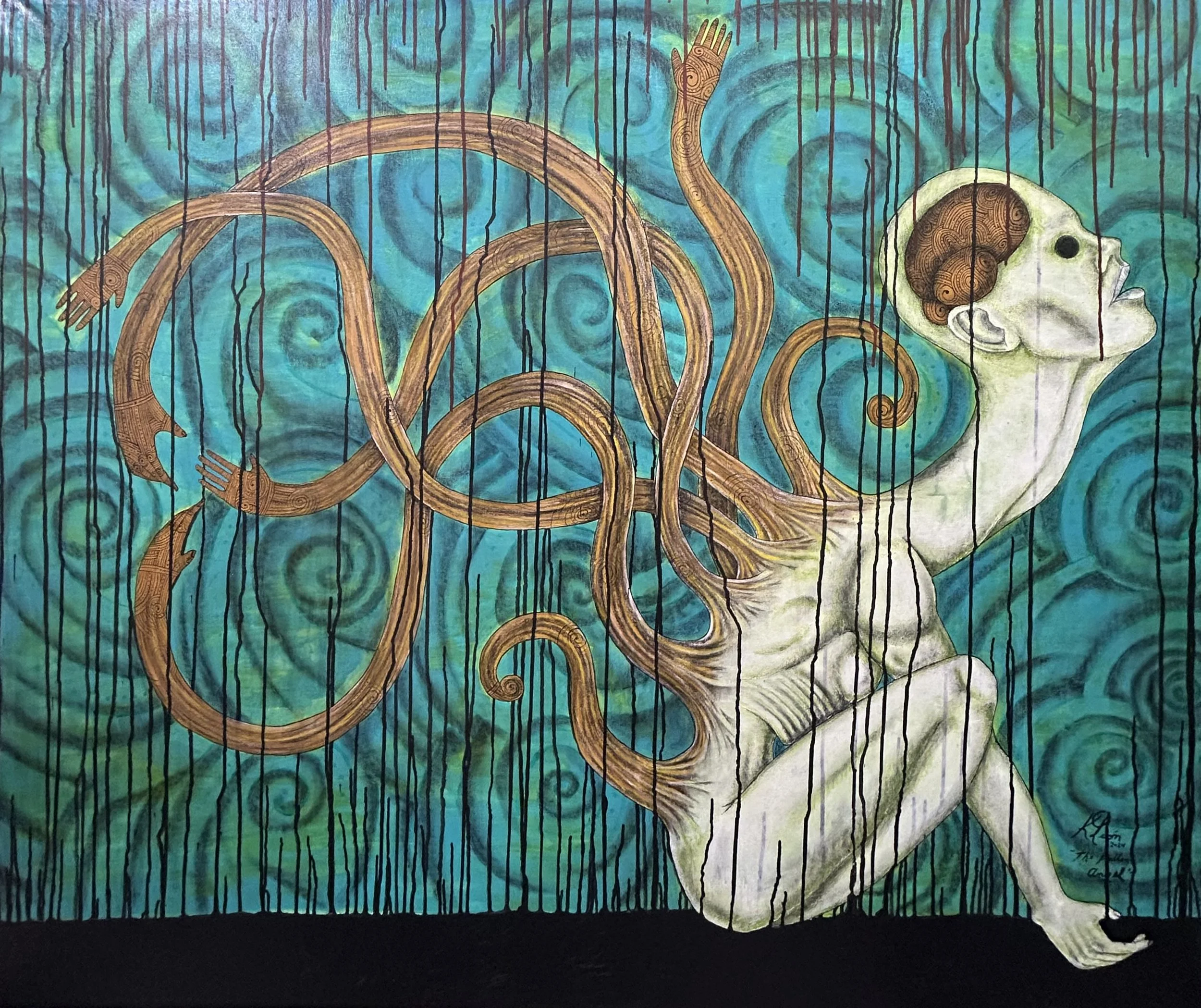 Image 1 of 7
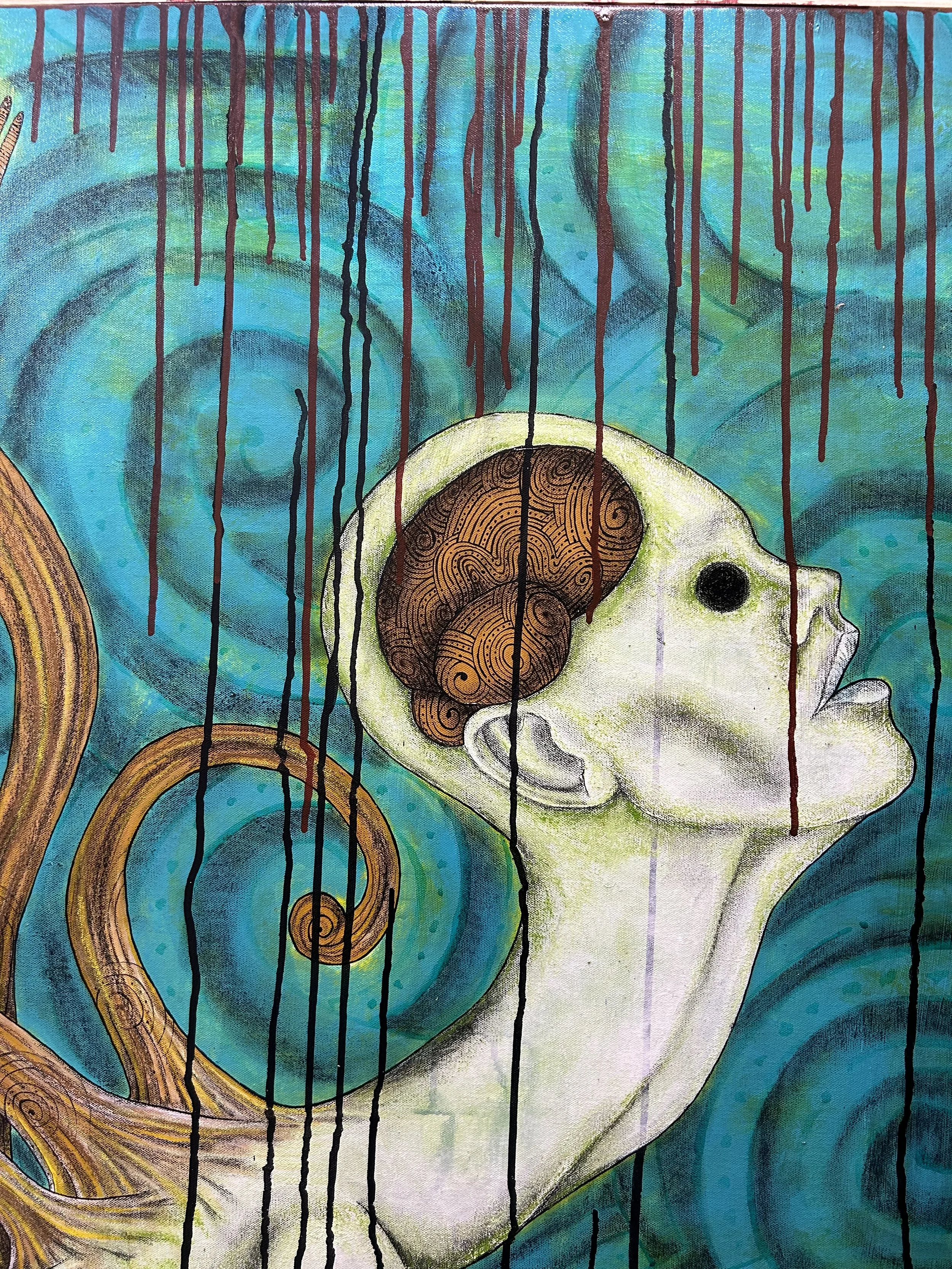 Image 2 of 7
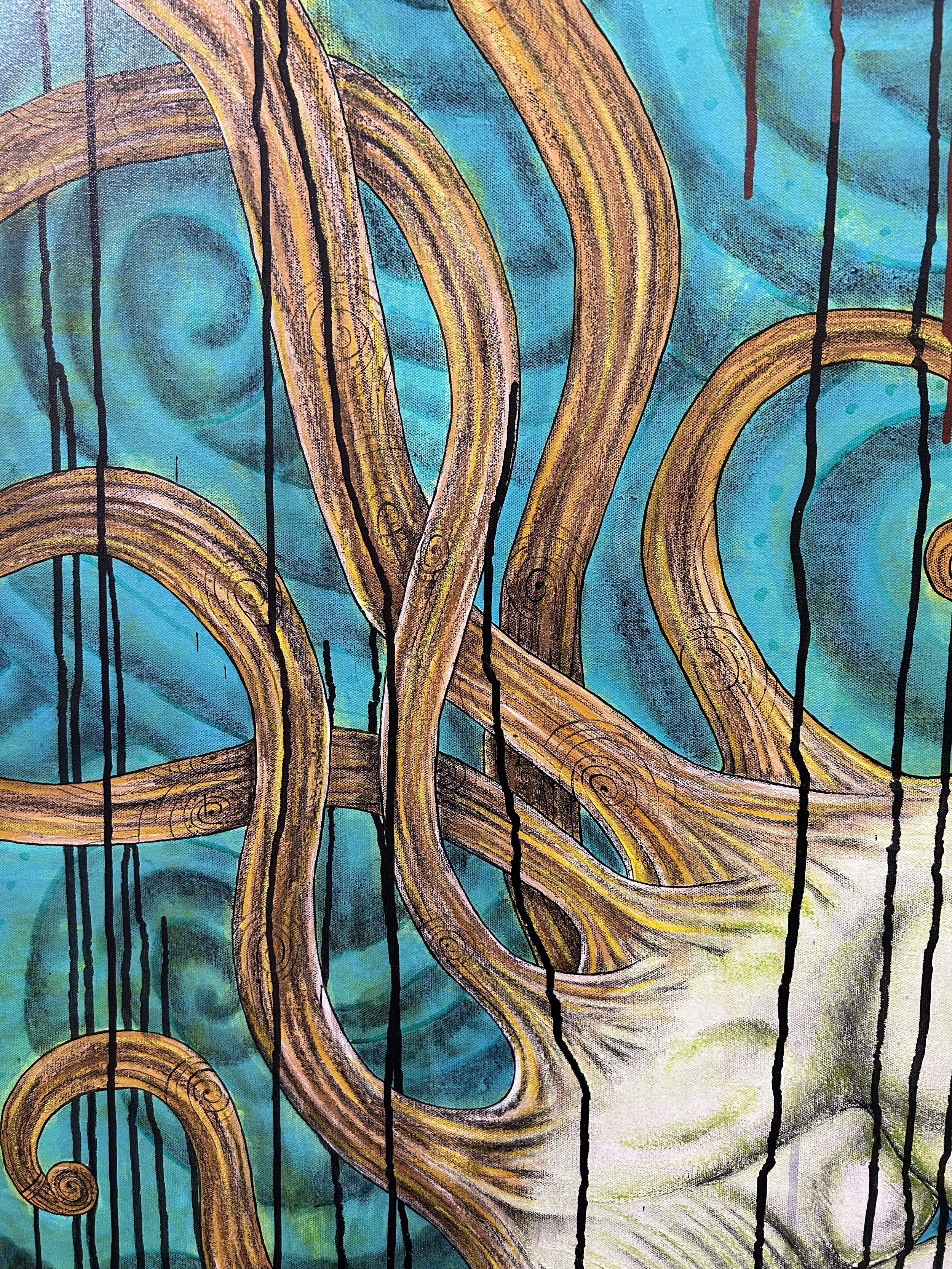 Image 3 of 7
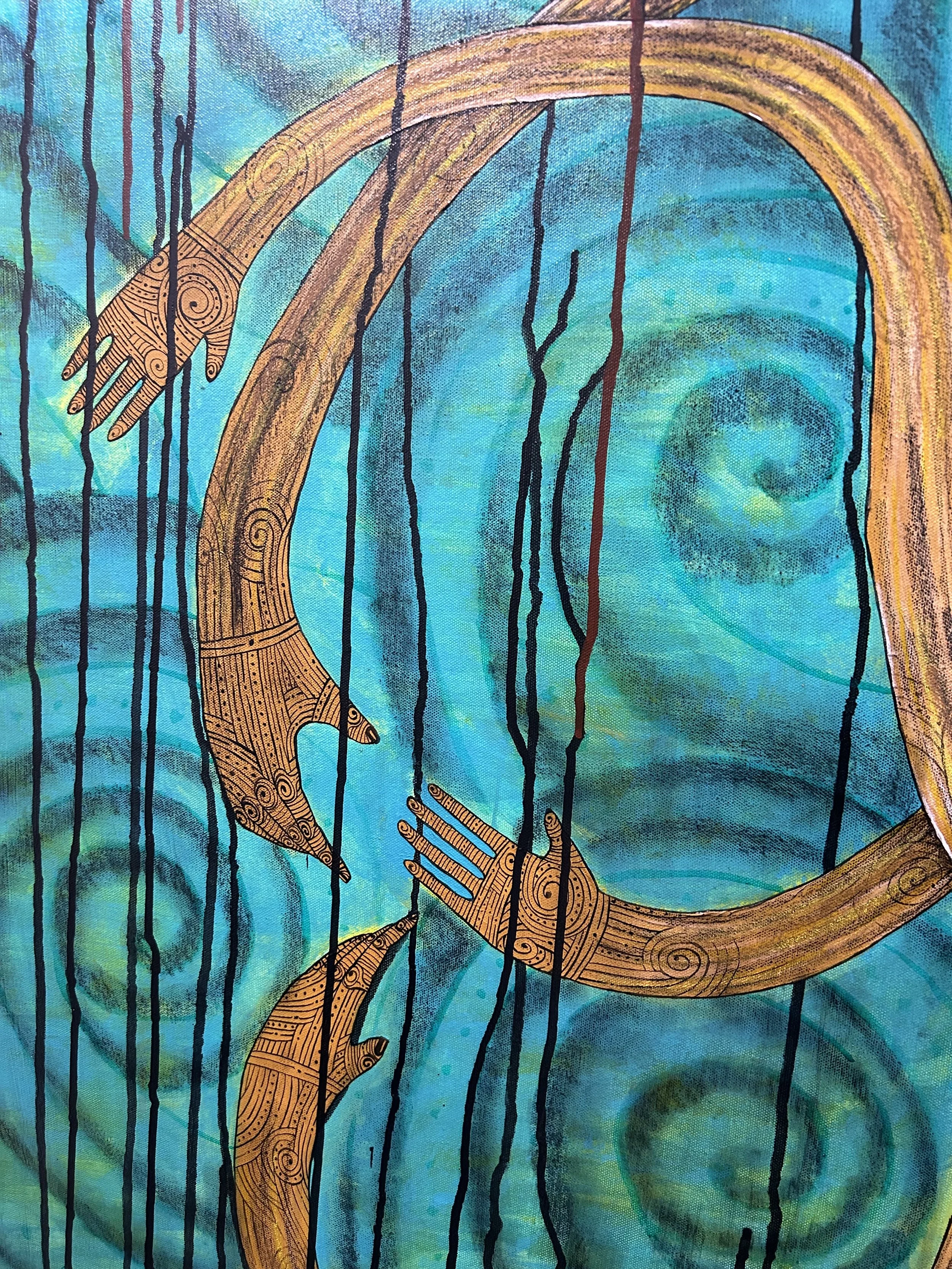 Image 4 of 7
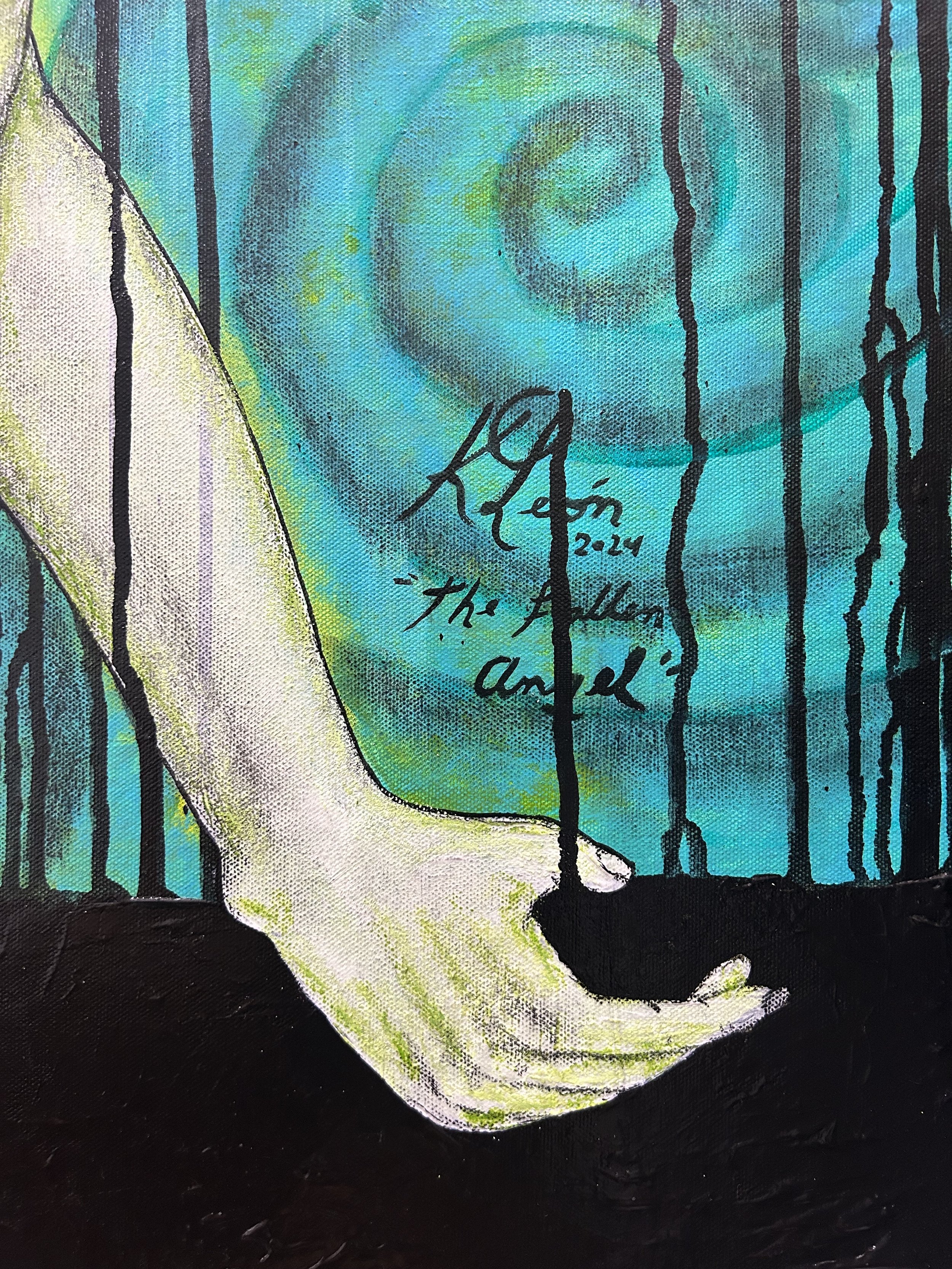 Image 5 of 7
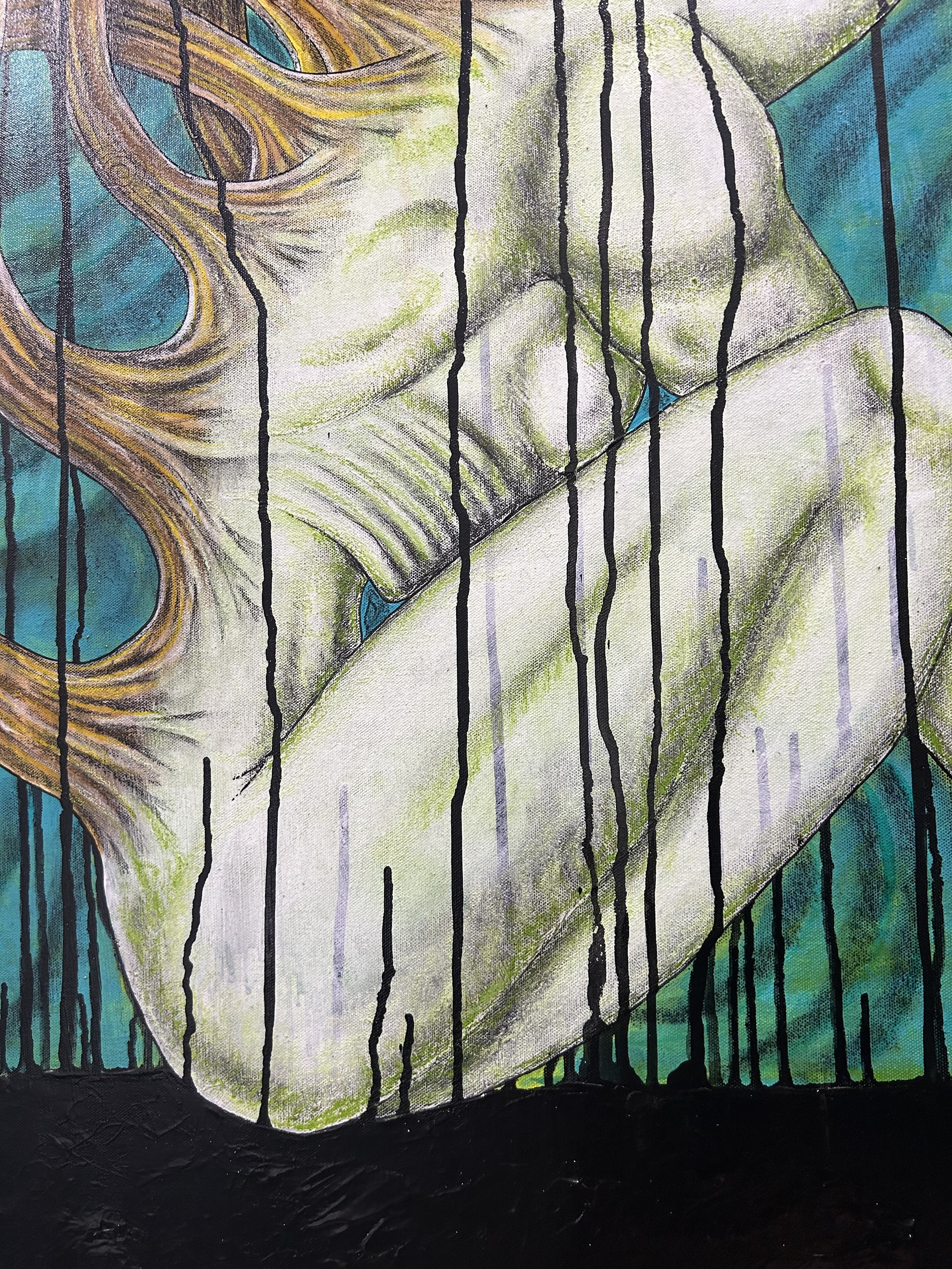 Image 6 of 7
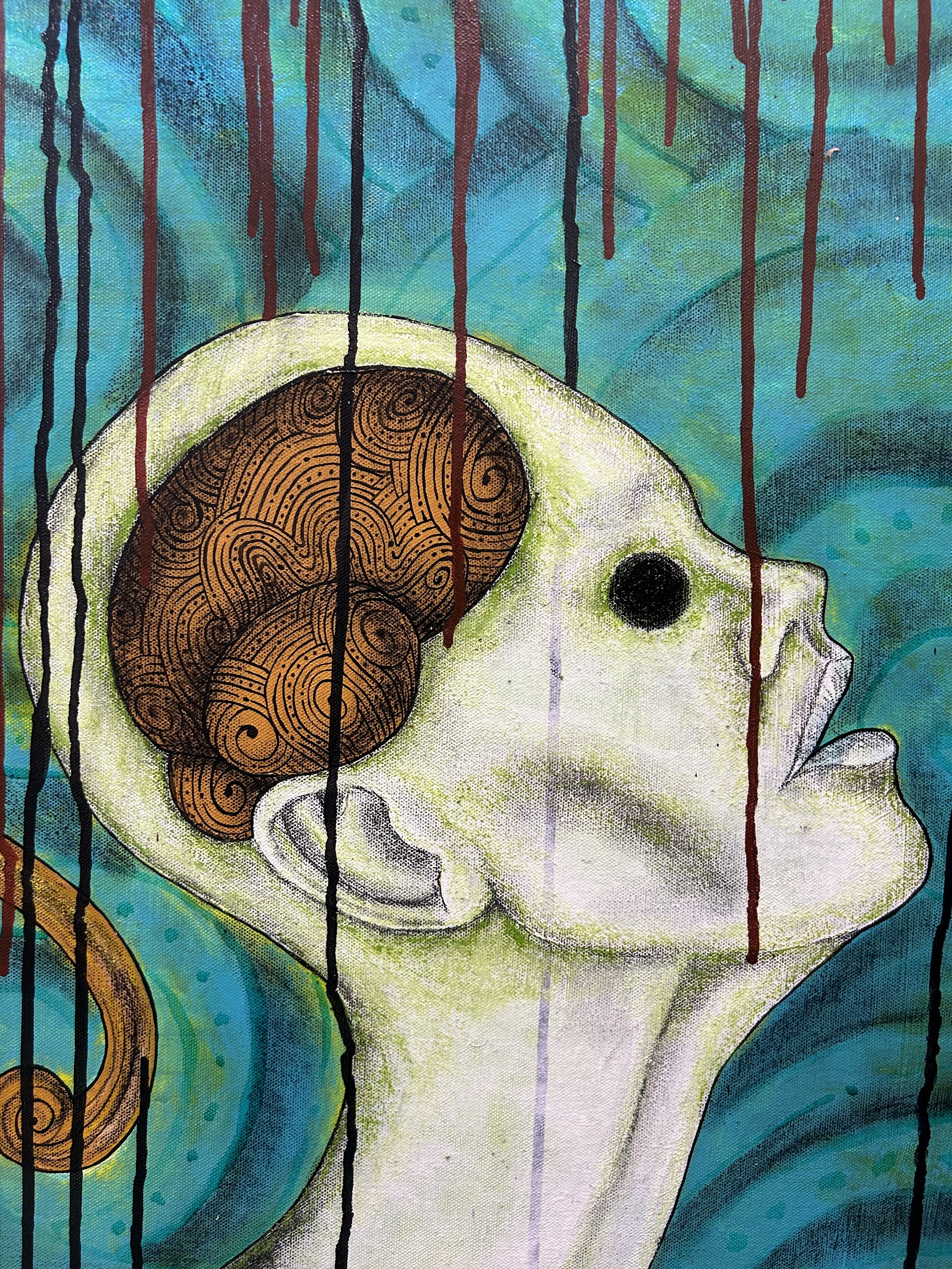 Image 7 of 7